Measuring AI ROI: A Proven Framework for Business Leaders in 2026
Learn the AI ROI measurement framework business leaders use in 2026 to track value, reduce waste, and justify AI investments with confidence.
Dec 9, 2025
AI projects fail at an alarming rate of 80% - double the failure rate of non-AI IT projects. Business leaders need a solid ROI measurement framework to navigate the AI world of 2026.
Organizations overwhelmingly see AI as vital to their future - 82% according to recent data. Yet most companies haven't moved beyond basic experiments. This creates what experts call the "AI productivity paradox." The situation mirrors early IT investments when companies poured money into technology but didn't see clear business gains. The numbers tell a concerning story: 49% of CIOs say proving AI's value blocks progress, and 85% of large enterprises can't properly track their ROI.
AI success goes beyond getting the model accuracy right. The real questions need answers: Does the AI actually reduce customer churn? Tracking AI KPIs and measuring business effects has become a vital part of organizations that invest billions in machine learning, generative AI, and agentic systems.
This piece offers a tested framework that connects technical implementation with business outcomes. You'll learn practical ways to show AI's value, get stakeholder support, and boost returns on your AI projects.
Understanding AI ROI in 2026 Context
Organizations plan to boost their AI spending this year, with 91% increasing their investments. In spite of that, companies struggle to measure these investments' true value.
Why traditional ROI models fall short for AI
Traditional ROI models depend on linear returns and predictable timeframes, but AI breaks these conventions. Standard investments generate direct financial gains through better efficiency or higher sales. AI benefits, however, surpass traditional metrics. Deloitte's research shows that AI often produces intangible outcomes such as better vendor relationships, happier employees, and stronger customer involvement.
AI projects intertwine with broader transformation efforts—digital, operational, and structural. This makes isolating AI's specific contribution a complex task. On top of that, disconnected platforms and data quality create more hurdles. About 25% of organizations point to unreliable infrastructure and data as barriers to AI ROI.
The difference between trending and realized ROI
The ai roi measurement framework needs to separate two types of returns:
Trending ROI: Early progress indicators show value before financial effects appear. Better productivity, faster processes, and improved decision-making fall into this category.
Realized ROI: These measurable results develop over time and include lower costs, higher revenue, and better conversion rates.
This explains why 64% of respondents say AI enables state-of-the-art solutions, while only 39% can link EBIT effects at the enterprise level.
AI ROI as a strategic business value framework
Most executives (65%) now see AI as part of corporate strategy. They understand that returns might take years to show up and go beyond financial metrics. High-performing companies treat AI as an enterprise transformation rather than just an efficiency tool.
Companies that achieve meaningful returns take a different approach to AI. They become three times more likely to use AI to change their business fundamentally. AI ROI leaders focus heavily on strategic outcomes. Half of them prioritize "creation of revenue growth opportunities" while 43% emphasize "business model reimagination".
The Six Dimensions of AI ROI Measurement
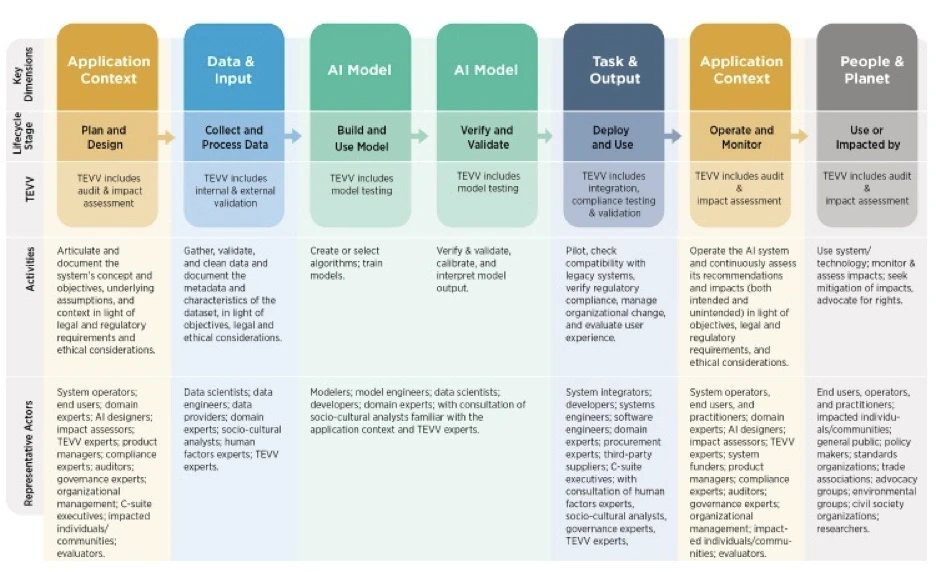
Image Source: InterVision Systems
Businesses need a multi-layered approach to measure AI's value. Companies that succeed look at six key areas that together paint a complete picture of returns.
Business impact: revenue growth and market share
Companies built for the future with AI see 1.7x revenue growth and 3.6x three-year total shareholder return compared to those falling behind. Marketing, sales, strategy, corporate finance, and product development show the highest revenue jumps from AI. About 71% of companies using AI in marketing and sales report higher revenues, though most see less than 5% growth.
Operational efficiency: time and cost savings
80% of companies implement AI mainly to cut costs. Software engineering, manufacturing, and IT operations benefit most from these savings. The numbers show that 49% of companies save money using AI in service operations, while 43% see savings in supply chain management. These improvements lead to faster processes and lower transaction costs.
Model performance: accuracy, latency, and fairness
Technical metrics show how well AI models deliver results that match business goals. Teams track accuracy, precision, recall, F1-score, and latency. Generative AI needs extra attention to hallucination rates and grounded response percentages. Good measurement also looks at fairness through metrics like disparate impact ratio and demographic parity.
Customer experience: CSAT, NPS, and retention
Customer experience metrics reveal how AI boosts satisfaction and loyalty. AI helps nearly half of all companies improve customer satisfaction. Teams track this through Customer Satisfaction Score (CSAT), Net Promoter Score (NPS), and Customer Effort Score (CES). AI-powered chatbots help companies achieve better CSAT scores by cutting wait times.
Innovation capacity: AI-driven features and agility
Top AI companies put breakthroughs and transformation first. Yes, it is true that 50% of AI leaders plan to transform their businesses with AI by redesigning workflows. These companies are three times more likely to completely rebuild their processes. Companies with quick delivery processes consistently get more value from AI.
Economic efficiency: TCO, payback period, and LCOAI
The Levelized Cost of Artificial Intelligence (LCOAI) helps companies measure total capital and operational costs per unit of AI output. This metric helps compare vendor API deployments with self-hosted models. Leading companies expect returns within two quarters for operational use cases.
Building a Proven ROI Framework for AI Initiatives
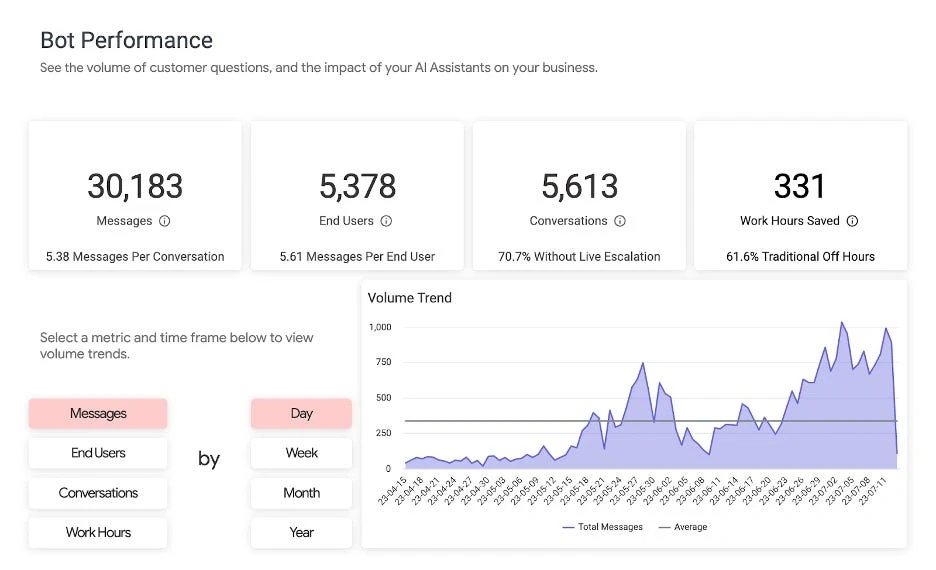
Image Source: The Father Gap - Substack
Companies that achieve positive AI returns make clean baselines their priority - they're 3x more likely to succeed. Salome Mikadze, co-founder of Movadex, advises: "Stop asking 'what is the model's accuracy' and start with 'what changed in the business once this shipped'".
Setting baselines and defining success metrics
Document your current performance metrics before adding AI to your process. Your metrics should track time-to-value, adoption rates, and task completion without human help. Teams need to tag each stage as machine-generated, human-verified, or human-enhanced when people and AI work together. This creates a clearer picture of combined performance.
Aligning AI KPIs with business goals
Every AI project must tie directly to business objectives. Specific outcomes like "increase customer retention by 5% in six months" work better than vague targets like "improve performance". This approach will help prove AI's value to executives.
Using control groups and A/B testing for attribution
Control groups help calculate ROI accurately. You'll see AI's true effect by comparing groups that used AI against those that didn't. Source86's Branz explains: "We isolate the impact by running A/B tests between content that uses AI and those that don't, tracking the same KPIs and comparing outcomes to human-only outputs".
Tracking ROI across efficiency, revenue, risk, and agility
A complete measurement system needs to track these four key areas:
- Efficiency gains: Lower operational costs and reduced manual hours
- Revenue generation: Improved conversions and new revenue streams
- Risk mitigation: Fraud prevention and compliance improvements
- Business agility: Faster pivots into new markets
Need help building your AI ROI framework? Contact us for expert guidance.
Governance, Tools, and Pitfalls to Avoid
Strong governance structures are the foundations for sustainable AI ROI. Only about 15% of boards get AI-related metrics. This creates a major oversight gap in most organizations.
AI ROI dashboards and tracking tools
Up-to-the-minute dashboards show AI performance clearly through sections that display key metrics like overall ROI, efficiency improvements, and financial effects. Companies can use tools like:
- ERP Systems (SAP S/4 HANA, Oracle ERP Cloud) to integrate AI financial data
- BI Dashboards (Tableau, Power BI) to visualize real-time AI ROI KPIs
- AIOps platforms (Dynatrace, Splunk AI) to monitor system health
Cross-functional governance and executive alignment
Teams across finance, process improvement, and IT create strong methods to track ROI. Boards must specify which AI topics need full-board review versus committee discussion. This prevents confusion and keeps accountability clear. The governance model should work with existing decision processes and company culture.
Common pitfalls: pilot tunnel vision, no baselines, short-termism
"Pilot tunnel vision" ranks among the most dangerous pitfalls - teams focus too much on single projects and lose sight of company-wide goals. Companies without baseline data can't show true value. The rush to see quick ROI hurts most, as it overlooks AI's long-term strategic value.
Best practices for sustainable AI ROI tracking
A systematic ROI governance captures all initiatives and groups expected returns. Teams should track performance against original targets and adjust when needed. The right mix of "hard ROI" (financial) and "soft ROI" (employee satisfaction, innovation capacity) creates balance in measurements.
Need help setting up effective AI governance? Contact Kumo for expert guidance.
Conclusion
Organizations face a big challenge to measure their AI ROI as they look to maximize investments in 2026 and beyond. Traditional ROI models don't work well with AI initiatives because AI benefits exceed standard metrics. Many companies invest heavily in AI but can't show clear returns.
We developed a detailed framework that looks at six key areas: business effect, operational efficiency, model performance, customer experience, innovation potential, and economic efficiency. These areas work together to show both quick financial gains and long-term strategic value.
Successful companies follow similar steps with AI. They set clear starting points before deployment and link AI KPIs to specific business goals instead of unclear technical targets. They run control groups and A/B tests to measure AI's real effect. These companies also track how well AI performs across efficiency, revenue, risk management, and business flexibility.
The difference between early ROI signs and actual results matters a lot when talking to stakeholders. Some benefits show up quickly while others need time and vision to develop.
Strong governance helps track AI ROI over time. Teams from different departments, immediate analytics dashboards, and balanced measurements help companies avoid common traps like focusing too much on pilots or short-term gains.
AI keeps changing rapidly. Companies that succeed will know both the technology and how to measure its business value. This framework helps bridge technical work and business outcomes. It turns the AI productivity challenge into a competitive edge.
FAQs
Q1. How can businesses effectively measure the ROI of AI investments in 2026? Businesses can measure AI ROI by focusing on six key dimensions: business impact, operational efficiency, model performance, customer experience, innovation capacity, and economic efficiency. This multidimensional approach provides a holistic view of both immediate financial returns and long-term strategic value.
Q2. Why do traditional ROI models fall short when applied to AI projects? Traditional ROI models are inadequate for AI projects because they rely on linear returns and predictable timeframes. AI often delivers intangible benefits that transcend conventional metrics, such as improved vendor relationships and stronger customer engagement, making it challenging to isolate its specific contribution.
Q3. What are some common pitfalls to avoid when tracking AI ROI? Common pitfalls include "pilot tunnel vision" (focusing too much on isolated projects), failing to establish baseline data before implementation, and short-termism (obsessing over immediate ROI while ignoring long-term strategic value). Avoiding these pitfalls is crucial for sustainable AI ROI tracking.
Q4. How important is governance in measuring AI ROI? Governance is critical for sustainable AI ROI measurement. Effective governance structures include cross-functional teams, real-time dashboards, and balanced metrics. Only about 15% of boards currently receive AI-related metrics, highlighting a significant oversight gap in most organizations.
Q5. What's the difference between trending ROI and realized ROI in AI projects? Trending ROI refers to early progress indicators suggesting value before financial impact materializes, such as improved productivity and faster processes. Realized ROI, on the other hand, represents quantifiable results that emerge over time, including reduced costs, increased revenue, and higher conversion rates.